



Repair and service of car air conditioning systems are among the tasks in the workshops that most often give rise to complaints. Air conditioning systems are technically complex, sensitive to faults and dependent on the correct interaction of components, workflows and communication. To reduce complaints, it is necessary that all links in the value chain – from spare parts wholesalers to garages and car owners – take responsibility and understand each other's challenges.
The air conditioning system – a vulnerable system
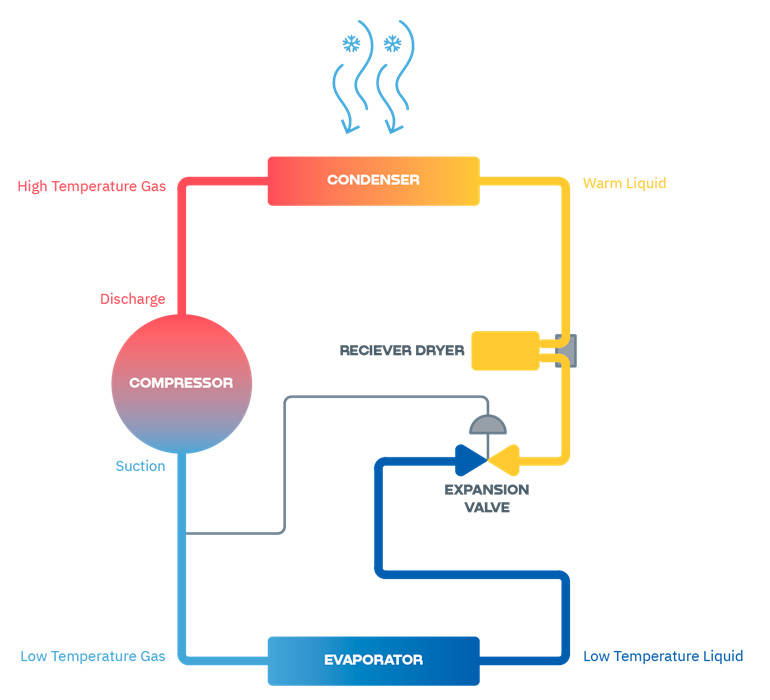
A modern air conditioning system consists of many components: compressor, condenser, evaporator, expansion valve, dry filter, pressure sensors, hoses and control systems. A mal functioning component will quickly affect the entire system. At the same time, the system works with high pressure, refrigerant and oil, where even small deviations in quantity or purity can lead to operational problems – often several weeks or months after a repair.
Read also:
Repairing an AC system is complex!
Why might it be a good idea to change AC hoses preventively?
That is precisely why preventing complaints is not a question of one correct action, but of quality in the entire process.
The spare parts wholesaler's perspective: Quality, correctness and advice
For the spare parts wholesaler, complaint prevention starts with product quality and correct matching.
Correct and complete parts
A frequent cause of complaints is incorrect or incomplete spare parts. Air conditioning compressors are often supplied with transport oil, the wrong type of oil or without the correct dry filter. If the workshop is not aware of these conditions, damage quickly occurs, which can be mistakenly attributed to the replaced part.
The wholesaler should therefore:
- Ensure clear information on oil type and quantity
- Inform about the need to replace, for example, dry filter or condenser
- Provide technical documentation and installation instructions
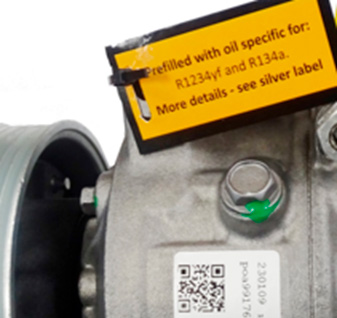
Clear indication of oil type and quantity on a Triscan A/C compressor
Read also:
Triscan A/C hoses are always delivered as complete units with sensor included
Technical support and responsible advice
A professional spare parts wholesaler acts not only as a supplier, but also as a technical sparring partner. By advising workshops on typical causes of failure, correct flushing of the system and warranty requirements, the risk of both technical faults and subsequent disputes is minimized.
At the same time, it is crucial that the wholesaler sets clear conditions for complaints – for example, requirements for documentation of flushing or oil quantity – so that expectations are aligned in advance.
The workshop's perspective: Diagnosis, process and documentation
From the workshop's side, complaints are often expensive, time-consuming and burdensome for the customer relationship. Many complaints are not due to defective parts, but to deficiencies in the workflow.
Correct diagnosis before repair
One of the biggest problems is inadequate troubleshooting. If an air conditioning system does not cool, the cause may be leakage, electrical failure, contamination in the system, or mechanical damage. Replacing one component without eliminating the root cause often leads to repeated failures.
Thorough diagnosis involves:
- Pressure measurement before and after repair
- Checking sensors and wiring harnesses
- Assessment of the system in relation to age
Compliance with procedures
Repairing air conditioners requires discipline:
- Flushing the system in the event of a compressor breakdown (on vehicles where possible)
- Replacing the dry filter
- Correct vacuum time
- Precise refrigerant and oil filling
If one of these is skipped, the risk of consequential damage is high. Although time and cost pressures can tempt you to take shortcuts, it rarely pays off in the long run.

Documentation as protection
Good documentation is one of the most effective tools against complaints. By storing data for vacuum tests, fill volumes and pressure values, the workshop can document that the work has been done correctly. This strengthens both the dialogue with the wholesaler and the trust of the customer.
The car owner's perspective: expectations, understanding and maintenance
For the car owner, the air conditioning system is first and foremost a comfort function – and when it doesn't work, a quick and durable solution is expected. However, many complaints arise due to misunderstandings.
Unrealistic expectations
A car owner may find it difficult to understand that an air conditioning repair is not always a "one size fits all" solution. If the system is old or has been leaking for a long time, new faults may occur after the repair, without necessarily being due to poor workmanship.
Clear communication about:
- System health
- Risk of consequential damage
- The difference between repair and maintenance
is essential to avoid dissatisfaction.
Lack of maintenance
Many car owners don't realize that air conditioning requires regular servicing. Running with too little refrigerant results in poor lubrication of the compressor and can lead to breakdowns. Once the damage has occurred, it is often experienced as a "sudden error", even though it has actually developed over time.
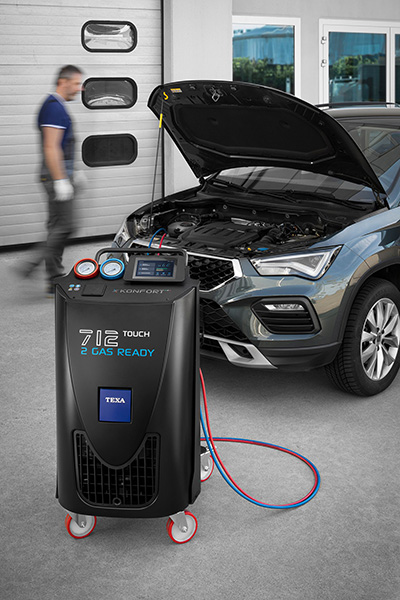
A/C service performed with equipment from TEXA
Trust and transparency
When the workshop explains the work, shows documentation and takes the time for dialogue, understanding increases – and thus acceptance if problems arise later. A well-informed customer is far less likely to advertise.
Shared responsibility – fewer complaints
Avoiding complaints when repairing air conditioning systems requires cooperation and mutual understanding:
- The wholesaler delivers quality, knowledge and clear conditions
- The workshop ensures correct diagnosis, process discipline and documentation
- The car owner contributes with realistic expectations and ongoing maintenance
When all three parties take their role seriously, the number of complaints is significantly reduced – for the benefit of both finances, job satisfaction and customer satisfaction.