


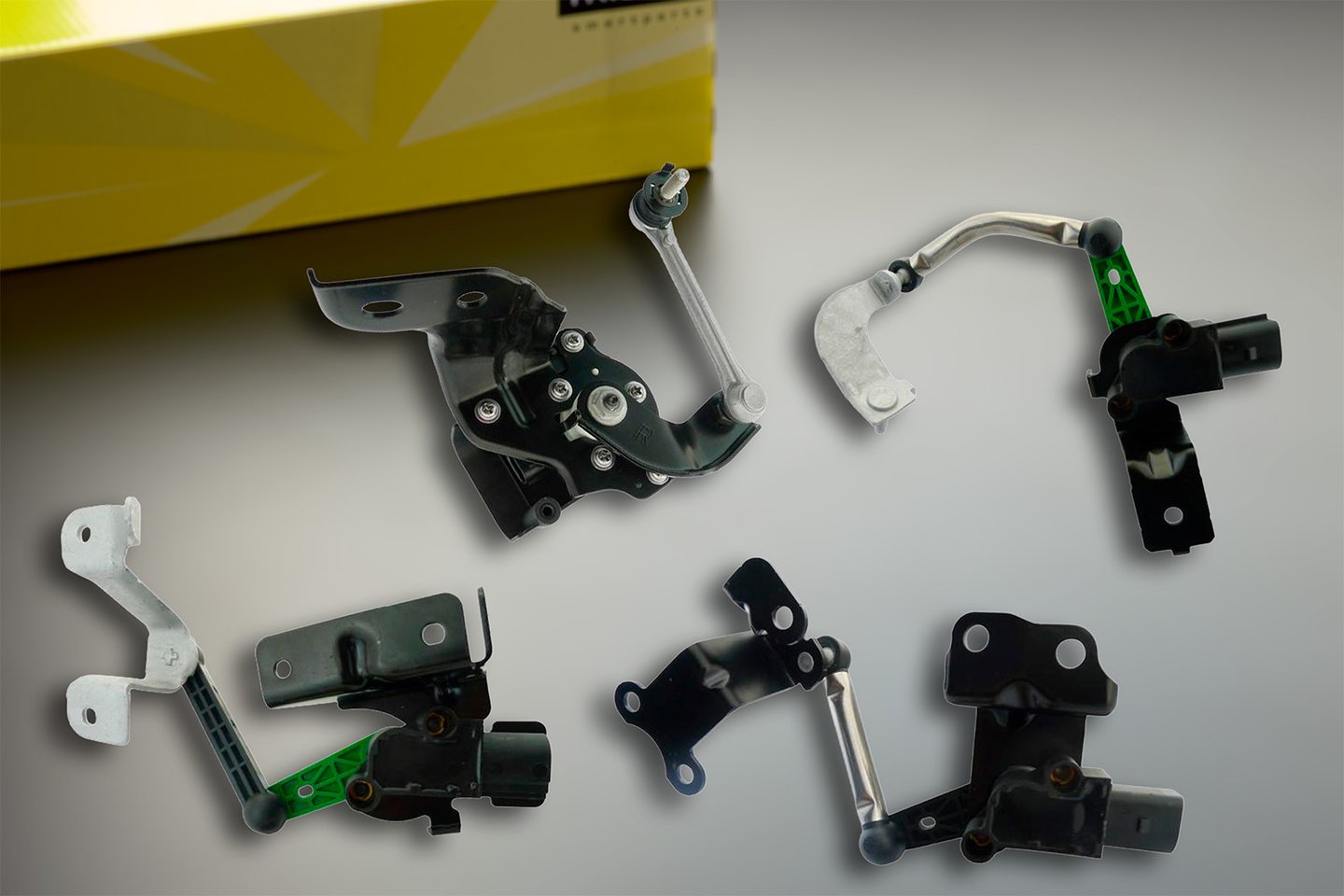
LEVEL SENSORS
-
check_box
For BMW, MERCEDES, PSA, TESLA and VAG
-
check_box
OE Quality
-
check_box
Scope of delivery as OE
-
check_box
Swing Durability Test: 1 Million Cycles
-
check_box
IP6K9K - highest standard of protection for electronics
-
check_box
Working temperature -40-105°C
What is the task of the level sensor?
A level sensor provides information about a vehicle's ground clearance, which, depending on the car model and equipment variant, is used to:
- Maintain proper suspension height – especially in pneumatic or hydraulic suspension systems
- Automatically adjust headlight visibility based on the load – to avoid dazzling other road users
- Optimize handling and comfort by adjusting damping or suspension stiffness
- Enable features such as automatic levelling for heavy loads
How many level sensors are there on a car?
Most cars with level sensors have 2 to 4 sensors installed. Some only have 1 or 3.
- Luxury cars and cars with air suspension - usually 4 sensors - one at each wheel
- Vehicles that only have automatic headlight adjustment - often 2 sensors - one on the front and one on the rear axle. The exact number depends on the complexity of the system
How does a level sensor work?
Level sensors are mounted in the undercarriage, where they create a connection between the body and the suspension via one or more moving joints. Using a potentiometer or a Hall effect sensor, the level sensor detects the angle of the lever, which continuously changes in line with the load the suspension is exposed to. The sensor sends a voltage signal to the ECU (Electronic Control Unit), which is used to interpret the ground clearance and adjust the suspension and/or headlight angle accordingly.