


The thermostat has evolved over the years from the well-known simple, conventional thermostat without bypass valve over thermostats built into the housing - at first in metal and later in plastic - and where the temperature of the cooling water determines the opening of the thermostat, up to the latest types where the opening of the thermostat is electrically or electronically controlled via the vehicle engine management.
Engines in modern cars are smaller in terms of both weight and volume, but on the other hand they often have a significantly higher performance. At the same time there is a demand for less fuel consumption and less pollution as stated in the Euro 5 and Euro 6 standards. This places new demands on the cooling system, including the thermostat, which has thus become more and more sophisticated.
Over time the thermostat has become part of the engine, to optimize the engine temperature and the fuel consumption. These new types of thermostats can have up to three or four sensors / switches built into the housing. In VAG cars with FSi and TFSi engines there are two built-in thermostats in the complete thermostat housing to regulate the engine temperature. Furthermore, we will in future see thermostats as a built-in and integrated part of the water pump, too.
Car brands using thermostats of the latest technologies are Mercedes, PSA , Opel , Renault , BMW, Ford and VAG. They are all part of the Triscan program. You will therefore be able to offer your customers the latest technology within thermostats.
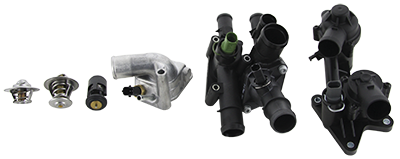
The development of the thermostat over the years – starting from left with the oldest model